Listen on your favorite platform.



Description
Unlock high-quality, inclusive math instruction in this episode of Math: Universally Speaking as host Ron Martiello sits down with Jenny Beltramini, Deputy Chief Program Officer for the Math Team at Student Achievement Partners. Tune in as they dive deep into the e2 (Essential and Evidence-Informed) Instructional Practice Framework, exploring how educators can go beyond standard grade-level content to build joyful, linguistically sustaining, and culturally responsive classrooms.
Discover practical strategies for K–8 teachers, generalists, and instructional leaders looking to remove barriers, leverage student assets, and make math meaningful and accessible for every learner—including multilingual students and those with language processing needs.
Show Notes
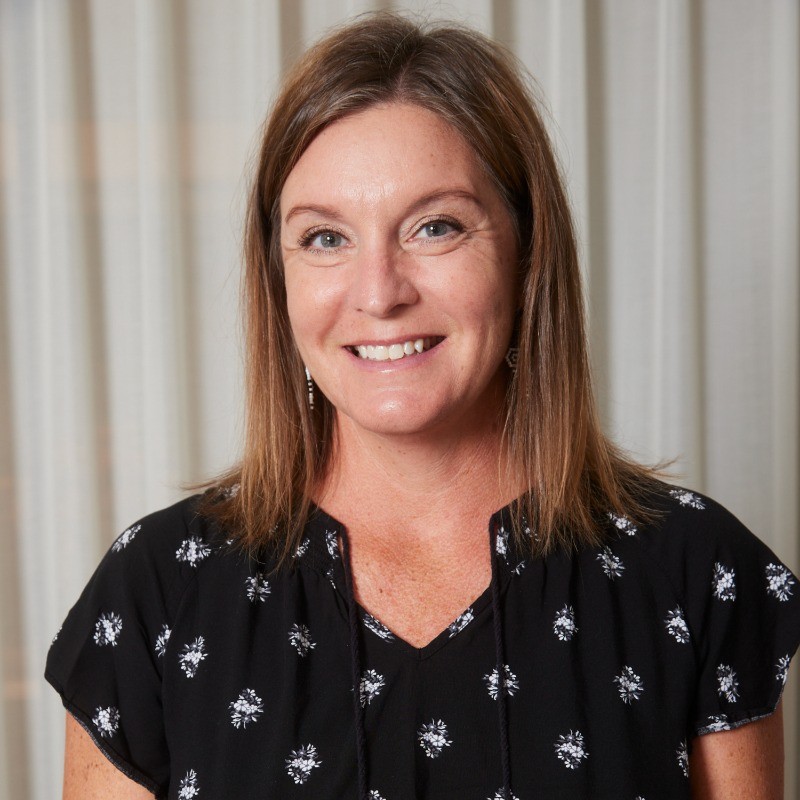
Jennie Beltramini is a Math Deputy Chief Program Officer at SAP (Student Achievement Partners). She has over 20 years of experience as a teacher of grades 3–8, a K–8 math instructional coach, and a designer and facilitator of professional learning for districts, states, and national organizations. She is a Nationally Board Certified Teacher in early adolescent mathematics. She’s deeply committed to humanizing mathematics instruction, centering and amplifying the voices, experiences, and knowledge of students and educators in all aspects of her work.
e² Instructional Practice Suite
Transcript
This transcript has been lightly edited and curated for clarity, readability, and flow, and is not a strict verbatim account.
Math, Equity, and the e² Framework with Jennie Beltramini
Ron: Hello, friends. This is Ron Martiello, and welcome to Math: Universally Speaking. We have a very special guest joining us today—a guest I’ve been meaning to have on the podcast for quite some time. Our schedules have aligned, and the stars have aligned! I’d like to introduce you to Jennie Beltramini. Hi, Jennie.
Jennie: Hi, Ron. Thanks for having me. It’s great to be here.
Ron: Thanks for joining us today. I know you’re joining us all the way out there from the West Coast. Am I correct?
Jennie: Yes, I am in Washington State, about 80 miles north of Seattle.
Ron: I’ll tell you what. One of the things I thoroughly enjoy about this podcast is how small the world is when I connect with people from across the country or across the world. I grew up in a little neighborhood in Philadelphia—a little row home—where my entire world was the Jersey Shore and the Poconos Mountains. When I can talk to people all the way over on the West Coast, thousands of miles away, it’s a real treat. So thanks for joining us today.
Jennie: Yeah, I’m happy to be here.
Ron: Jennie, why don’t you tell us a little bit about your work and the important things you and your team are promoting recently?
Jennie: Absolutely. Like you said, I work at Student Achievement Partners. Our website is Achieve the Core, and I’m a deputy chief program officer for our math team. I help our chief program officer lead an amazing, fabulous group of folks who are doing wonderful things around math in the world.
A lot of folks have known Student Achievement Partners for a long time through our work at Achieve the Core. We’ve centered for years on supporting states, school districts, and educators in implementing the college- and career-ready standards that different states have around the country. We have some really great tools and resources—the Coherence Map is one that a lot of people know.
Ron: Oh yeah, I know that Coherence Map. I love that Coherence Map!
Jennie: It’s a huge favorite. We provide lots of educator-friendly tools and resources to help folks teach high-quality math instruction. Right now, my work primarily centers around supporting people in thinking about and implementing our new framework for high-quality instruction: the e2 framework. It stands for Essential and Evidence-Informed, because we believe everything in it is essential for kids to have a high-quality experience in math classrooms, and it’s founded on a robust body of evidence. My work is centered squarely in supporting folks around the country with the tools and resources that surround that framework.
Ron: Jennie, that framework definitely caught my ear when I heard you speak at NCSM last year in October in Atlanta. I was intrigued because, as you mentioned, the entry point for many of us with Student Achievement Partners and Achieve the Core was the Coherence Map, focus documents, and standards resources. But you’ve expanded that spectrum of resources with the e2 framework.
Before we dive into the framework itself, I’d like to know: from your travels, universally speaking, what is the hottest topic in math in your world right now?
Jennie: That’s a hard question because there are several! One thing we’re spending a lot of time on at Student Achievement Partners—especially among my colleagues—is thinking about “math that matters” and math that is future-ready.
Kids right now are entering a changing world in the workforce. Jobs are evolving with the introduction of technology and AI, and students encounter very different things in school today. We’re thinking a lot about life after high school: Where do they go? What do they do? Especially in high school, what is the most important math kids need to be working on?
We’re doing a lot of rethinking and revisioning around high school mathematics—introducing data science, for instance, and recognizing how important it is that kids understand and unpack all the data they see in the world. We want high school math to prepare students for a vast array of careers and postsecondary paths.
At the same time, we’re thinking about math that matters in elementary school: How do we make math relevant, interesting, exciting, and meaningful? I asked this myself as a student, thinking, Why do I need to learn this? My own children say that too: “I’m never going to use this again!” So, how do we make real connections for kids? Those are the conversations happening across the math education space right now.
Ron: I think those hot topics lend themselves perfectly to our conversation around the e2framework. I’m always talking about how math is more than just standards—groundbreaking as those standards were at the time. As technology evolves and the world needs more, standards eventually evolve, but this framework serves as an invitation to all students, making sure they belong and can actively engage in mathematics.
Can you give us an overview of what the e2 framework is and why it’s so important?
Jennie: We call the e2 framework a framework for high-quality instruction that is more comprehensive than how we used to talk about instruction 10 years ago. Back then, we defined high-quality instruction as giving all kids access to rigorous, grade-level content and mathematics. We still believe that’s true—kids need access to high-level math to be successful, and too many kids, especially marginalized students, still lack that access for various reasons.
However, a few years ago, we looked at the current state of instruction and achievement in the country and realized something was still missing. Too many kids were still not achieving high levels of mathematics or having great classroom experiences. What else was necessary?
We dug into a vast amount of scholarship and research around joyful, asset-based, and affirming instruction. We came up with a framework that expands the definition of high-quality instruction from just one category (grade-level content) to four categories.
Ron: Right!
Jennie: That’s the background behind it. Often, teachers see these items in professional development silos—a big push for student belonging and cultural responsiveness in one workshop, and a separate silo for engaging multilingual learners. This framework brings it all together across four pillars.
Ron: You talked about grade-level instruction and access. Let’s dive into that second pillar: joy. How would you define joy, and what does joyful instruction look like for math teachers?
Jennie: When we share the framework with educators, joy is the category that resonates the most. We hear people say all the time, “We’re so glad you included this,” because joy is what’s missing for a lot of kids in math classrooms.
Giving teachers, leaders, and coaches something concrete and tangible to strive for feels affirming. But while joy is the category people love the most, it’s also the most misunderstood. It’s not just about surface-level happiness or excitement; it’s much deeper. It encompasses all the classroom conditions that make that manifestation of joy possible.
It involves concepts like belonging—what does belonging look like in math class? It includes safety and affirmation so students feel safe making mistakes, safe being who they are, and safe sharing partial thinking. It’s about promoting curiosity and exploration, allowing kids to collaborate, and giving them opportunities to reflect: “How am I feeling in math right now? How are things going?” Having it be okay for a student to say, “This is hard, but I feel safe and supported to keep persevering.” Those foundational conditions are what make true joy in mathematics possible.
Ron: And how hard is that when we didn’t grow up in joyful math classrooms? There was a lot of red ink, only one right way to do things, and it was hard to find joy unless you were labeled a “math person.” You guys are inviting everyone to the party now, which I love.
That brings us to the third pillar. Teachers often find it challenging to bring joy and belonging to everyone—especially when language is a barrier. Universal Design for Learning (UDL) highlights language barriers, but you turn that around with the third pillar: linguistically sustaining. Tell us about that.
Jennie: We chose those words very intentionally. “Linguistically sustaining” has an asset-based, additive approach. It’s not just about supporting kids to learn English (though that’s part of it), but also sustaining the rich linguistic repertoires they bring into the classroom.
It connects deeply to belonging—allowing kids to show up with all of their linguistic repertoires and use those as assets to engage with math. This means leveraging multiple languages, dialects, or social registers of speaking, making it okay for kids to communicate naturally while gradually guiding them toward precise mathematical language.
There is a robust evidence base around translanguaging—letting kids move between languages and between social and academic registers. That helps students build cleaner, crisper academic vocabulary. It supports multilingual learners, students with communication differences, and diverse language backgrounds. We view their linguistic assets as tools for learning mathematics.
Ron: My initial access point when I heard “linguistic” was simply multilingual learners. But you helped broaden my perspective to include students with communication or language processing differences. Math is a language in and of itself, and many math teachers who love the math itself don’t realize how much language is at play. As you often say, math teachers are language teachers!
Jennie: Exactly. A lot of math teachers don’t see themselves that way initially because their training didn’t prepare them for it. Teachers and leaders thank us for giving them concrete strategies here. Educators using our Learning Walk tool have made small tweaks to their planning and instruction that have had massive payoffs for multilingual learners.
Ron: Those small moves make big differences. Let’s look at the fourth pillar: culturally responsive and sustaining instruction. What ideas and resources help teachers make math more culturally responsive?
Jennie: The tagline for this pillar is simply asset-based. How do we see all the assets students bring into the classroom as pathways to engage with mathematics?
The first part is affirming and developing students’ identities—honoring their families, traditions, cultures, and funds of knowledge. The second part is making the math about things that matter to them. That ties right back to our earlier discussion about making math relevant.
This is often the pillar teachers find hardest because of a tension with materials. No published U.S. curriculum was written to match the exact students sitting in your classroom, Ron, or in my local district. So this pillar is about taking your core materials and making intentional connections to students’ lives, their communities, and the real world.
It doesn’t mean changing the rigor or dropping grade-level standards. Instead, it means using standards as an avenue to help kids use math to address real problems in their communities, acting as change agents.
Ron: Listeners, you can see how math connects across all four pillars—not just grade-level instruction—to deeply engage learners. Jennie, where can our listeners find these resources online?
Jennie: Our new website is learnwithsap.org (since we are Student Achievement Partners). Right at the top, our e2 Instructional Practice Suite is linked. You can download a three-page overview of the framework and its evidence base. We also have learning walk tools, coaching tools, blog posts, and webinars available there.
While the Learning Walk tool was designed for instructional leaders to observe across classrooms, teachers find it equally valuable because it answers the concrete question: What does this look like in instruction?
Ron: When teachers see a framework this comprehensive, they don’t need to throw everything out. They can find existing connections, leverage their strengths, and make small tweaks. Do you have any advice for teachers who might feel overwhelmed?
Jennie: It is a lot, and it can feel overwhelming. My advice is always: pick one or two things to try.
For example, I worked with teachers last year who focused on just one indicator under linguistically sustaining for an eight-week cycle: using language objectives to clarify communication expectations in each math lesson. After eight weeks, they felt tighter in their planning, though kids weren’t using the objectives independently yet. So the next eight weeks, they layered in a self-assessment strategy from the joy pillar—having students reflect using “fist-to-five” check-ins on their mathematical reasoning. Suddenly, the language objectives clicked. It’s all about gradual, intentional progression.
Ron: I know many of our listeners are elementary generalists teaching multiple subjects. While we’ve discussed the e2 framework through a math lens, it isn’t limited to math, right?
Jennie: That’s right! We have these tools for literacy as well, and the framework was originally built as a cross-content tool. I’ve walked with district leaders using our cross-content learning walk tool in art, science, and PE classrooms. High-quality instruction looks consistent across all disciplines. When a school makes a unified push—like school-wide language objectives—it reduces cognitive load for students and simplifies planning for generalist teachers.
Ron: Jennie, do you have any final thoughts or tips for our listeners today?
Jennie: When I joined Student Achievement Partners 10 years ago, I started as a teacher engagement manager. My core belief has always been in teachers as leaders—whether they hold a formal title or not. The success of standards in classrooms doesn’t come from district mandates; it comes from teachers owning the work as grassroots change agents.
I hope teachers look at this framework and say, “I’m going to pick this up and try it.” In the end, we want kids to love math time—not to leave 12th grade thinking, “I hate math and I’m not a math person.” We want them to say, “That was hard, but I did it, and I am successful.” That’s why we do this work.
Ron: That is why I invited you on the show! Thank you so much, Jennie, for sharing how this framework advances instruction so all students belong. Thanks for joining us today on Math: Universally Speaking.
Jennie: I’m so glad to be here. Thank you, Ron.
Ron: And ladies and gentlemen, thank you for joining us. I’ll make sure all the wonderful resources Jennie mentioned are included in the show notes. Be sure to check them out, explore the e2 framework, and find deeper ways of teaching mathematics for all of your students. Thanks so much, and take care!
Professional Development Questions
- Expanding High-Quality Instruction Beyond the Standards:
- Jennie notes that Student Achievement Partners expanded their definition of high-quality instruction from a single focus on grade-level content to four comprehensive pillars (Grade-Level Instruction, Joy, Linguistically Sustaining, and Culturally Responsive/Sustaining). As a grade level or department, where do our current instructional practices naturally align with these four pillars, and which pillar represents our biggest growth opportunity?
- Making Language Instruction Tangible in Math:
- Discussing the “Linguistically Sustaining” pillar, Jennie shares an example of teachers using weekly language objectives and student self-assessment (“fist-to-five”) to clarify communication expectations. How can we better integrate language objectives and academic vocabulary development into our daily lesson planning without viewing language support as a separate silo?
- Balancing Core Materials with Community Relevance:
- The conversation highlights the tension between using high-quality instructional materials and making math culturally responsive to the specific students sitting in our classrooms. What are some practical, low-barrier ways we can adapt or tweak our current curriculum to connect mathematical concepts to our students’ lives and local community without sacrificing rigor?
References
Google. (2026). Gemini (Large language model). Assisted in transcribing, formatting, and generating episode summary and professional development materials.https://gemini.google.com


Leave a Reply