Listen on your favorite platform.




Description
In this episode of Math Universally Speaking, Ron Martiello welcomes veteran educator and instructional leader Sheila Robitaille for a conversation on early numeracy and number sense development—two essential foundations for long-term success in mathematics learning.
Together, they explore how students often experience mathematics as procedures rather than conceptual understanding, and how weak early numeracy skills can contribute to math anxiety and disengagement. Sheila shares practical elementary math strategies, including purposeful wait time, mathematical discourse, gamification, and instructional approaches aligned with Universal Design for Learning (UDL) to support all learners.
The discussion highlights how play, inquiry, and low-floor/high-ceiling tasks promote equitable access while strengthening students’ mathematical identity and confidence.
The episode also introduces World Maths Day, a free global mathematics event hosted by 3P Learning, connecting students worldwide through engaging live math challenges.
If you’re looking to strengthen number sense, improve math engagement, and create inclusive mathematics classrooms where every student can succeed, this episode offers practical ideas you can use immediately.
Transcript
This transcript has been professionally edited for clarity and readability. It reflects the content and intent of the conversation but is not a verbatim, word-for-word record.
Early Numeracy with Sheila Robataille
Introduction
Ron Martiello:
Hello friends, and welcome to Math Universally Speaking. I’m Ron Martiello, and today I’m excited to welcome another special guest as we explore early numeracy and its impact on mathematics learning.
Be sure to stay with us through the end of the episode—we’ll also share information about an exciting global opportunity for students and teachers to participate in something truly epic.
I’m pleased to introduce our guest, Sheila Robitaille. Sheila, welcome to the podcast.
Professional Background
Sheila Robitaille:
Hi Ron—it’s wonderful to be here.
I’ve been an educator for about 30 years. My career has included classroom teaching, leadership roles, and principal positions across both elementary and secondary settings in public and private schools. I’ve also worked extensively in professional development.
Currently, I work with 3P Learning, an ed-tech company, where I support teachers in using digital tools to strengthen classroom instruction, enhance student learning experiences, and, whenever possible, save teachers time.
Passion for Supporting Educators
Ron:
What’s your favorite part of your work right now?
Sheila:
Working with teachers—especially new teachers. Their energy is contagious, and supporting their growth has always been something I’ve loved. My current role allows me to combine professional learning with mathematics instruction, which makes it a perfect fit.
The Most Pressing Challenge in Mathematics Education
Ron:
From your perspective, what is the most pressing challenge in mathematics education today?
Sheila:
Too many students learn mathematics as procedures to follow rather than concepts to understand.
This leads to fragile number sense. Students may memorize facts or count accurately but lack understanding of quantity or relationships. As a result, they rely on strategies like finger counting long after peers have moved to more flexible mental reasoning.
Research consistently tells us students must move from concrete experiences to visual representations and eventually toward abstraction—with explicit instruction throughout. Yet many classrooms still rely heavily on textbooks, whole-group instruction, and pacing guides rather than formative assessment and differentiation.
These challenges have existed for years—and they persist today.
Early Beliefs About Mathematics
Ron:
You wrote an article titled Early Numeracy as a Cornerstone for Long-Term Academic Success. Can you tell us more about that work?
Sheila:
Early numeracy is where students begin forming beliefs about themselves as learners.
Students start deciding:
- I can figure things out, or
- I’m not a math person.
Math is often one of the first subjects where students experience public comparison, right-or-wrong evaluation, and increasing cumulative difficulty. When understanding breaks down early, the effects compound over time.
Math anxiety frequently begins in these early years, and once it develops, it’s very difficult to reverse. Students begin avoiding risk because mistakes become associated with intelligence rather than learning.
What Early Numeracy Really Means
Ron:
What should educators understand about early numeracy?
Sheila:
Early numeracy goes far beyond counting.
Students need opportunities to:
- recognize quantities without counting,
- compare amounts,
- understand part–whole relationships,
- explain their reasoning, and
- engage in metacognition.
The challenge is that conceptual conversations take time, and teachers often feel pressure to cover content quickly. However, without conceptual understanding, students gain procedures without transferable understanding.
Intentional Instruction and Engagement
Ron:
What advice would you give teachers trying to engage all learners in numeracy?
Sheila:
Intentionality matters.
Teachers can:
- increase wait time before accepting answers,
- praise thinking rather than correctness,
- use collaborative problem solving,
- present problems without a single correct answer, and
- encourage students to listen to multiple strategies.
These experiences help students move into deeper mathematical thinking and build confidence.
The Role of Play and Gamification
Ron:
Let’s talk about play. What role does play have in numeracy learning?
Sheila:
Gamification can be incredibly powerful because it removes fear of failure.
When learners aren’t penalized for mistakes, they persist longer and try more strategies. Similar to video games, failure becomes feedback rather than judgment. Students naturally adopt a growth mindset because each attempt informs the next.
Gamified learning environments encourage experimentation, resilience, and engagement—qualities we want in mathematics classrooms.
Equity Through Early Numeracy
Ron:
How does early numeracy connect to equity?
Sheila:
Equity comes from interaction, conversation, and reducing abstraction through concrete experiences.
Instruction should emphasize:
- reasoning over speed,
- understanding over procedures,
- collaboration over competition.
Tasks that are low floor and high ceiling allow all learners to participate meaningfully. For example, open-ended problems such as “There are four more dogs than cats. What combinations are possible?” invite participation from learners at multiple developmental levels while maintaining shared mathematical discourse.
These experiences build tolerance for struggle, persistence, and respect for diverse thinking.
A Global Opportunity: World Maths Day
Ron:
You mentioned an exciting global opportunity for students. Tell us about it.
Sheila:
Our organization hosts World Maths Day, a free global mathematics event that has been running for over 18 years.
Students from around the world participate in live one-minute fluency challenges matched with peers at similar levels. Classes or individuals can join, and participation is open to all learners—not just elite mathematics students.
Recognized by the Guinness World Records as the world’s largest math competition, the event allows students to compete globally while experiencing mathematics in an engaging, inclusive environment.
Students even see the country flags of competitors they are matched with, helping them recognize mathematics as a truly global language.
Connecting Beyond the Classroom
Ron:
Providing students access to global experiences expands their sense of possibility. It shows them the world is larger—and that they belong in it.
How to Connect and Participate
Ron:
If listeners want to connect or participate, where should they go?
Sheila:
Educators can visit:
Registration is free. Once registered, classrooms receive early access to practice before the competition begins.
We encourage everyone to join.
Closing Reflection
Ron:
Sheila, thank you for joining us today and sharing your expertise.
To our listeners, we hope today’s conversation deepened your understanding of early numeracy, its connection to equity, and how intentional instructional choices can positively shape students’ mathematical identities.
Thank you for listening to Math Universally Speaking. Take care.
Show Notes
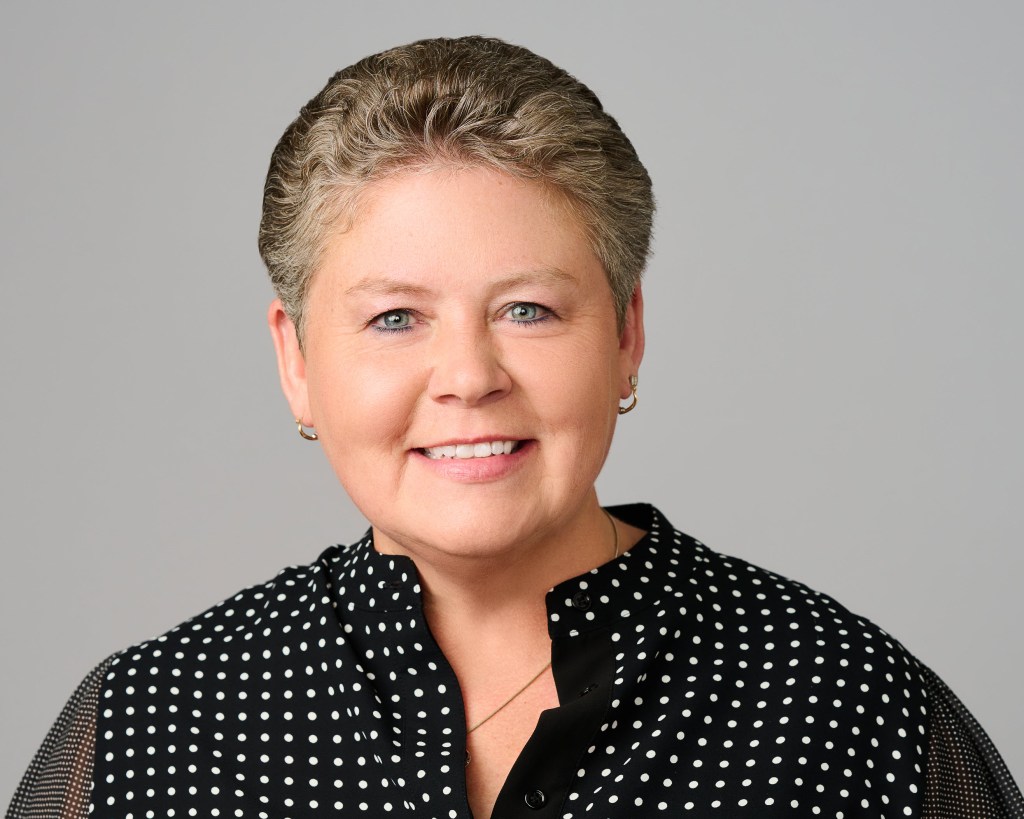
Early Numeracy Is a Cornerstone of Long-term Academic Success.
In her latest EdSurge article, Sheila Robitaille explores how strong early number sense, conceptual understanding, and positive math experiences shape students’ confidence, achievement, and future success in mathematics.
A must-read for educators and school leaders committed to strengthening early math instruction, equity in mathematics, and student mathematical identity.
World Math Day 2026 will be celebrated on March 25, 2026 globally and March 24 in the U.S. This annual event, organized by Mathletics from 3P Learning promotes mathematics education and aims to improve numeracy skills among students worldwide. Participants can engage in various online challenges and competitions, celebrating the belief that everyone can learn and excel at mathematics with the right support.
Professional Development Questions
- Building Conceptual Understanding
How can we shift instruction in our classrooms from focusing on procedural fluency to fostering deep conceptual understanding in early numeracy?
2. Equity and Inclusive Instruction
What strategies can we implement to ensure all students, regardless of ability level, have access to meaningful mathematical thinking and growth opportunities?
3. Mindset, Play, and Productive Struggle
How can play, gamification, and opportunities for productive struggle help students build confidence, resilience, and a positive mathematical identity?
References
Robitaille, S. (2025, March 3). Early numeracy as a cornerstone of long‑term academic success. EdSurge. https://www.edsurge.com/news/2025-03-03-early-numeracy-as-a-cornerstone-of-long-term-academic-success
Rufo, J. M., & Martiello, R. (2024). Conquering math myths with universal design: An inclusive instructional approach for grades K–8. ASCD.


Leave a Reply